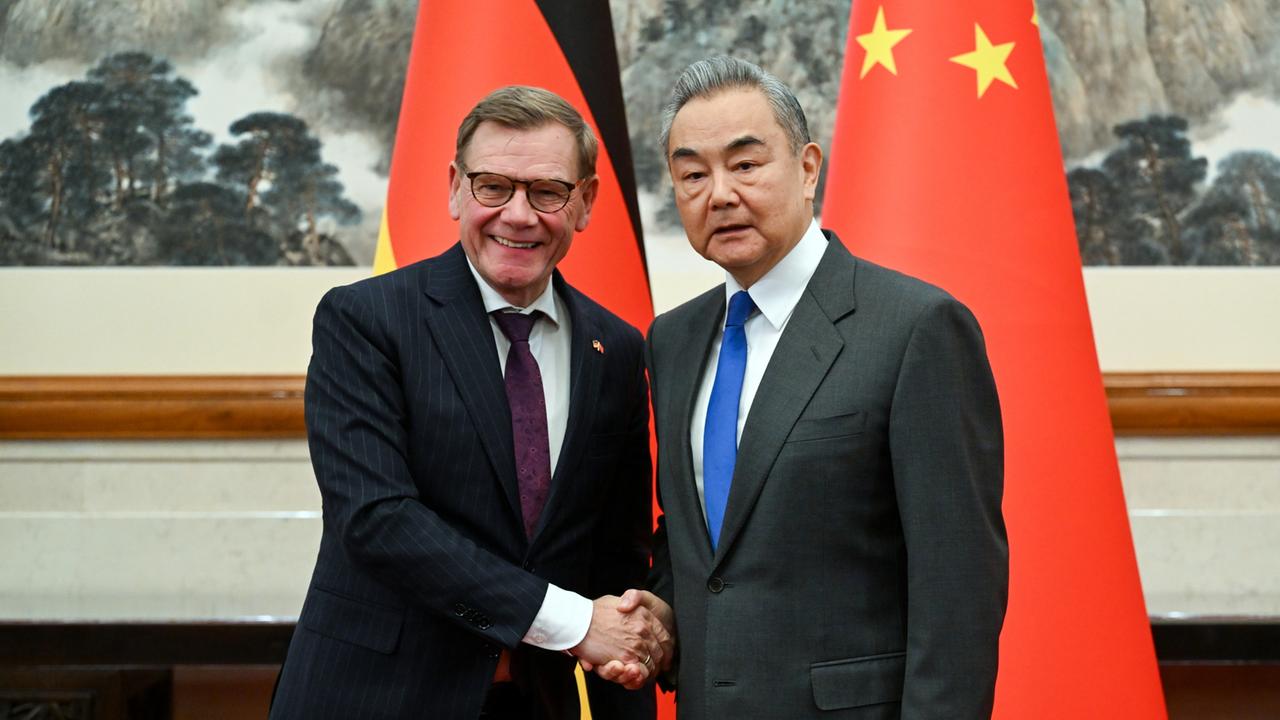
A Critical Diplomatic Mission: Germany's Rare China Visit Amid Global Challenges
In an era defined by geopolitical shifts and economic complexities, every high-level diplomatic engagement carries immense weight. The recent and much-anticipated visit of German Foreign Minister Johann Wadephul to China exemplifies this, representing a truly
seltener china besuch – a rare and significant occasion to tackle pressing issues head-on. This journey, initially postponed, underscored the intricate dance of international relations, where strategic interests, economic dependencies, and human rights concerns converge. Wadephul's trip, his first as Foreign Minister, was not merely a diplomatic courtesy; it was a determined effort to navigate a complex relationship critical to Germany, Europe, and the global stage.
The initial postponement of Wadephul's planned October visit, reportedly due to Beijing's refusal to grant high-level meetings following his criticism of China's threats against Taiwan, highlighted the sensitivity of the bilateral relationship. Taiwan, a self-governing democracy, is claimed by Beijing as its territory, and any perceived interference is met with strong rebuke. The successful rescheduling and the subsequent high-level meetings – including with Foreign Minister Wang Yi, Trade Minister Wang Wentao, Deputy Head of State Han Zheng, and Liu Haixing, head of the Communist Party’s international department – signal a willingness from both sides to engage, despite profound disagreements. This diplomatic re-engagement was crucial, touching upon everything from global supply chains to geopolitical security.
Navigating the Complexities of Rare Earths and Fair Trade
One of the paramount concerns dominating the agenda of this
seltener china besuch was the critical issue of rare earth elements. These 17 metallic elements, often misnamed as "earths" and not truly "rare" in their global distribution, are nonetheless incredibly difficult and costly to extract in usable concentrations. Yet, they are indispensable components of modern technology, powering everything from our smartphones, laptops, and electric vehicles to wind turbines and advanced medical equipment.
China currently holds a dominant position in the global supply chain for rare earths. This near-monopoly presents a significant vulnerability for industries worldwide, particularly in Europe. Recent years have seen China strategically throttling exports of these critical raw materials, creating ripple effects that threaten European manufacturing and innovation. For German companies, heavily reliant on a steady supply of these materials for their high-tech sectors, the situation has become increasingly precarious.
During his meetings, particularly with Trade Minister Wang Wentao, Wadephul championed the cause of predictable and fair access to these resources. The hope was to move away from the current, often bureaucratic system of individual export licenses to a more streamlined general licensing process. While initial signals from Beijing hinted at "movement," Wadephul stressed that significant work remains. This dialogue is not just about Germany; it's about broader European market access and ensuring fair competition for EU enterprises within China.
Practical Insights for Businesses:
*
Diversify Supply Chains: European companies should actively seek alternative sources for rare earths beyond China. This might involve investing in mining projects in other countries or collaborating with partners to develop new extraction capabilities.
*
Invest in Recycling and Substitution: Developing advanced recycling technologies for products containing rare earths can reduce reliance on virgin materials. Research into substitute materials that offer similar properties could also provide long-term solutions.
*
Advocate for Policy Changes: Support governmental efforts to establish secure and predictable supply chains, including international agreements and domestic incentives for sustainable mining and processing.
The need for reciprocal market access was also a key theme. While Germany and Europe require continued access to Chinese markets for various goods and services, China also depends on European markets. This interdependence creates a complex leverage point, where fair competition and transparency are paramount. Wadephul underscored Germany's need for access to Chinese markets, as well as crucial raw materials like rare earths and chips, highlighting that addressing uncertainties in these areas was a "absolute priority" of his visit. For a deeper dive into these economic intricacies, you might find our previous article insightful:
seltener china besuch - Article 1.
The Geopolitical Tightrope: China, Russia, and the Ukraine Conflict
Beyond economic considerations, the
seltener china besuch also squarely addressed the pressing geopolitical issue of the war in Ukraine and China's relationship with Russia. Germany, along with its European partners, has consistently urged Beijing to use its significant influence over Moscow to de-escalate the conflict. However, these attempts have largely been unsuccessful. Since the onset of the war, China has significantly expanded its economic ties with Russia, offering political backing to the Kremlin.
Wadephul's discussions with Foreign Minister Wang Yi were forthright. "We expect China to take a clearer stance towards Russia," Wadephul stated in Beijing, emphasizing that a war in Europe directly "touches our core interests." He conveyed Germany's expectation that its core interests be acknowledged and respected, just as China asserts its own. This aspect of the dialogue highlighted the delicate balance China attempts to maintain – supporting Russia while also trying to avoid outright condemnation from Western partners.
Challenges of Diplomatic Influence:
*
Conflicting National Interests: China views its relationship with Russia through its own strategic lens, prioritizing stability, geopolitical alignment against perceived Western hegemony, and energy security. These interests do not always align with European demands for immediate peace in Ukraine.
*
Limited Leverage: While China holds significant economic sway, its ability or willingness to fundamentally alter Russia's war strategy remains debatable. Beijing is unlikely to risk its strategic partnership with Moscow for Western diplomatic pressure alone.
*
Communication Gaps: Even with high-level meetings, differing interpretations of "influence" and "responsibility" can hinder genuine progress.
This part of the discussion revealed the depth of the challenges in convincing Beijing to shift its position. The authoritarian nature of China's governance further complicates these interactions, requiring a nuanced diplomatic approach that balances firmness with a recognition of China's sovereign interests. To understand the broader context of international efforts to engage China on security issues, consider exploring
seltener china besuch - Article 3.
Conclusion: A Path Forward Amidst Persistent Challenges
Johann Wadephul's
seltener china besuch was a testament to the enduring necessity of direct, high-level dialogue, even when facing formidable obstacles. While the visit yielded some encouraging signals regarding rare earths and an opening for continued discussion on trade conditions, the fundamental disagreements over China's stance on Russia and the Ukraine war remain largely unresolved. The complexity of the relationship—balancing economic interdependence with stark differences in political systems and geopolitical interests—means that such visits are rarely about immediate breakthroughs, but rather about maintaining communication channels and incrementally pushing for progress.
The visit served as a crucial reminder that Germany and Europe must continue to pursue a strategy of strategic autonomy, diversifying supply chains, investing in domestic capabilities, and engaging in robust diplomacy. The path to a more balanced and predictable relationship with China will be long and arduous, requiring consistent effort, clear communication of core interests, and an unwavering commitment to international norms and fair competition. While challenging, the alternative of disengagement is not viable, making every such rare visit a vital step in managing one of the world's most critical bilateral relationships.